
An eyePD educational guide. Clinically reviewed October 6, 2026. Ownership & editorial policy
Single PD: one number
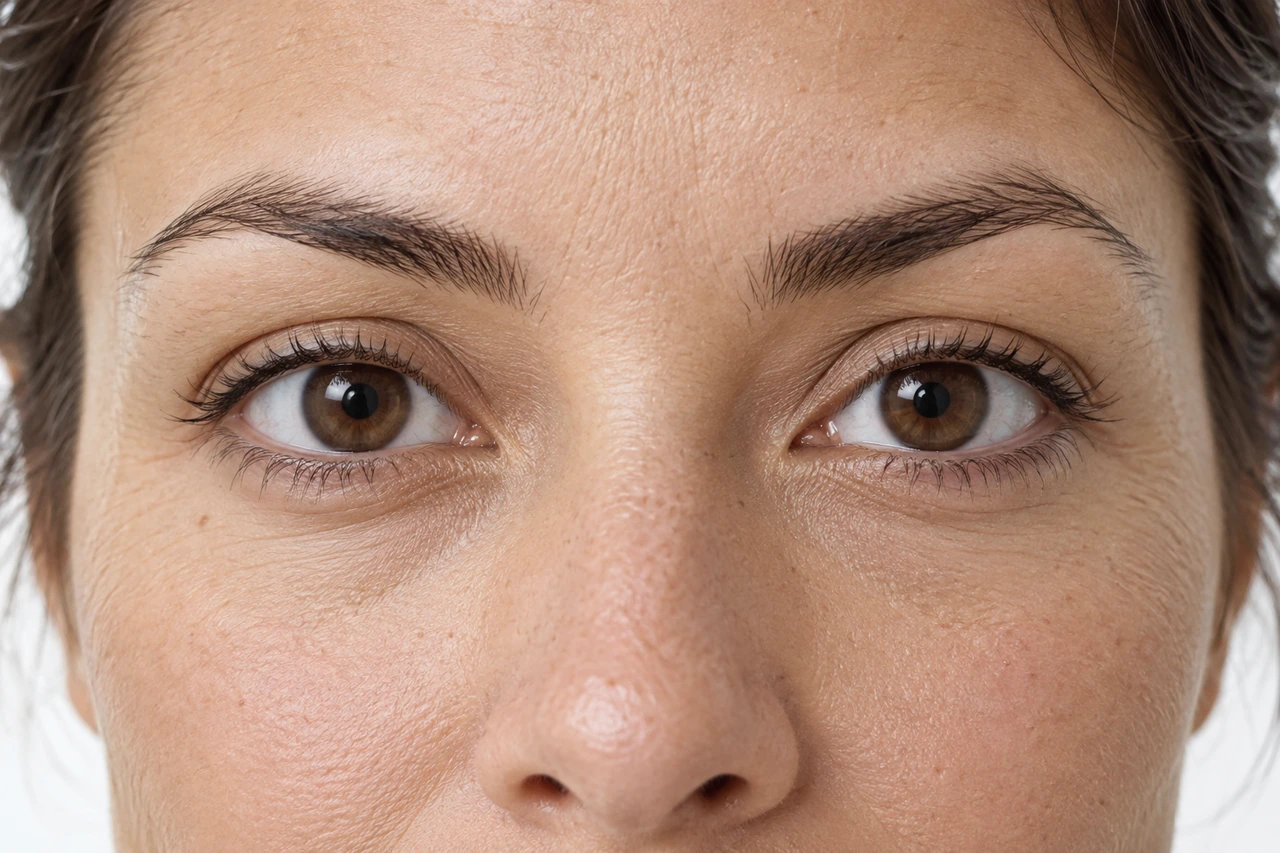
Dual PD: one number for each eye
AI-generated examples. New instructional images: clinical review pending.
Single PD gives one number for both eyes. Dual PD gives one number for each eye. The labels on your report tell you which kind you have. Two numbers can also mean distance and near, so check the labels first.
One number: binocular PD
A binocular PD is the distance between the centers of your two pupils, given as one number. It may also be called a single PD.
Two eye-specific numbers: monocular PDs
Monocular PDs measure each eye on its own, from the center of the pupil to the bridge of your nose. This may be called dual PD. Look for clear right-eye and left-eye labels. Do not guess which eye the first number belongs to.
Two numbers do not always mean right and left
Before you copy any number, check the heading and the words around it. Does the report name the right and left eyes? Or does it label distance and near instead? A slash mark or where a number sits on the page does not tell you the answer by itself.
If the labels are not clear, keep the report as it is and ask the practice that gave it to you what each number means. Do not split one number in half to fill two eye-specific boxes. Do not guess labels just because the numbers look familiar.
Four sample reports
Made-up example. Do not use these numbers to order glasses.
One number
Sample report text: PD: 63 mm
This is a single, or binocular, PD. The example does not say distance or near.
Ask: Is this number for distance or near?
Made-up example. Do not use these numbers to order glasses.
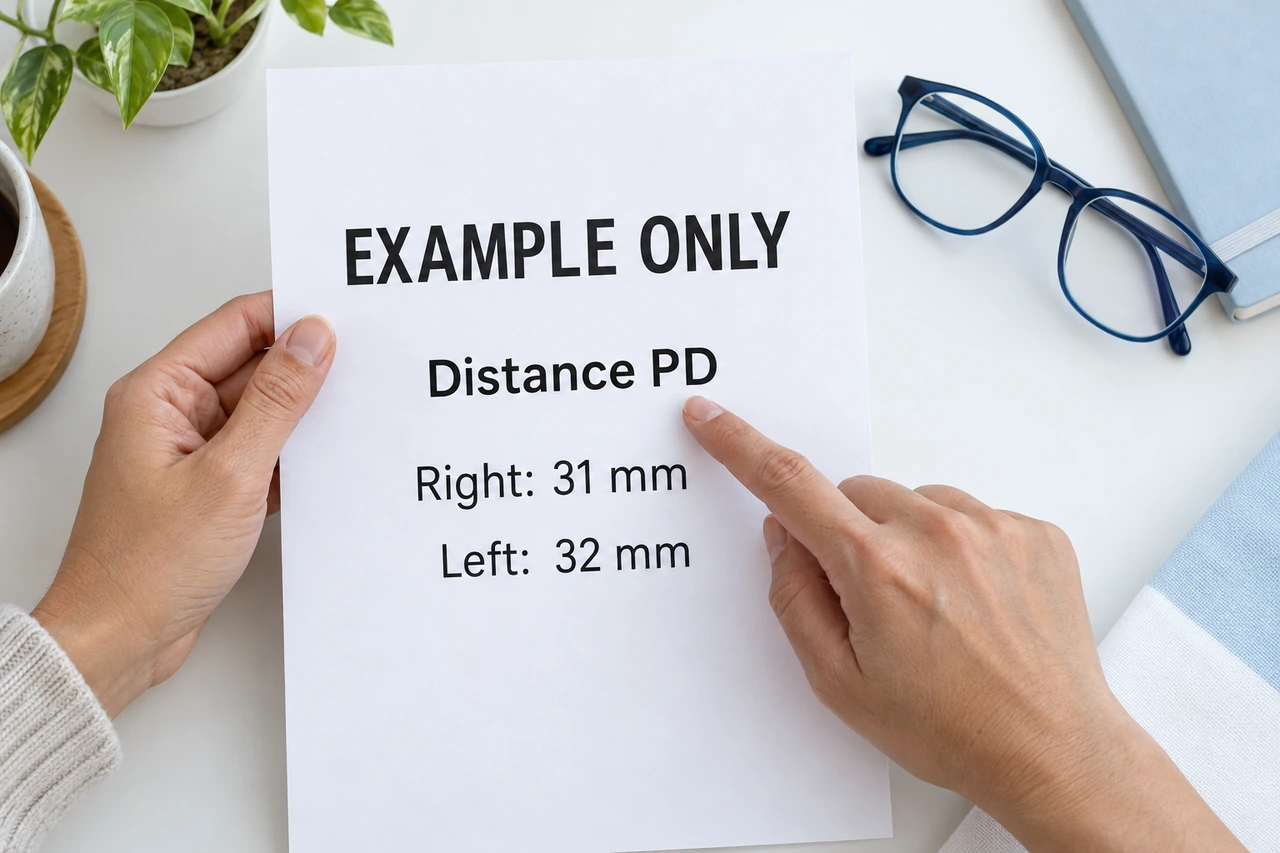
One number for each eye
Sample report text: Distance PD: Right 31 mm / Left 32 mm
This example gives a distance PD for each eye. Right and left are clearly labeled.
Ask: Does the order form ask for these two values or a total?
Made-up example. Do not use these numbers to order glasses.
Two viewing tasks
Sample report text: Distance PD: 63 mm / Near PD: 60 mm
These numbers are labeled distance and near. They are not right and left values. The example does not give a near working distance.
Ask: Which labeled measurement does this order need?
Made-up example. Do not use these numbers to order glasses.
Labels missing
Sample report text: 63 / 60
A slash alone does not tell you what these numbers mean. Ask the source to explain the labels.
Ask: What does each number describe?
When your order form uses a different format
Ask the retailer which written measurement its form needs. If your report does not say this clearly, ask your eye care provider to explain before you order.
Page metadata and navigation updated October 24, 2026. This is not a new clinical review. Editorial policy and review scope
Keep reading
Related reading
Reading a report
Near vs distance PD: what do the labels mean?
Free education. No purchase required. You choose where to shop.